
Call for Memories of this Place
TA T – The Listening Theater
Welcome to The Listening Theater, a transdisciplinary research and public engagement project by the Tieranatomisches Theater and the Zentrum für Kulturtechnik.
Through an Audioguide, Audiowalks, and a public programme, the project explores the histories, memories, and knowledge cultures of the Tieranatomisches Theater and Campus Nord of Humboldt-Universität zu Berlin, bringing together scientific research, artistic practices, historical inquiry, and community knowledge.
Together with students, researchers, artists, neighbouring institutions, historians, former employees, and local communities, we are building a growing oral archive and sound library that will become freely accessible in 2027.
This website offers different ways to contribute to a collective effort to document and understand 235 years of social, scientific, political, and ecological transformations across Campus Nord.
A Guide for Remembering
Campus Nord has been part of many lives. Some people studied here. Others worked, taught, researched, cared for animals, maintained buildings, walked through the park, met friends, attended classes, crossed the campus every day, or lived nearby.
We invite you to spend some time with your memories of this place.
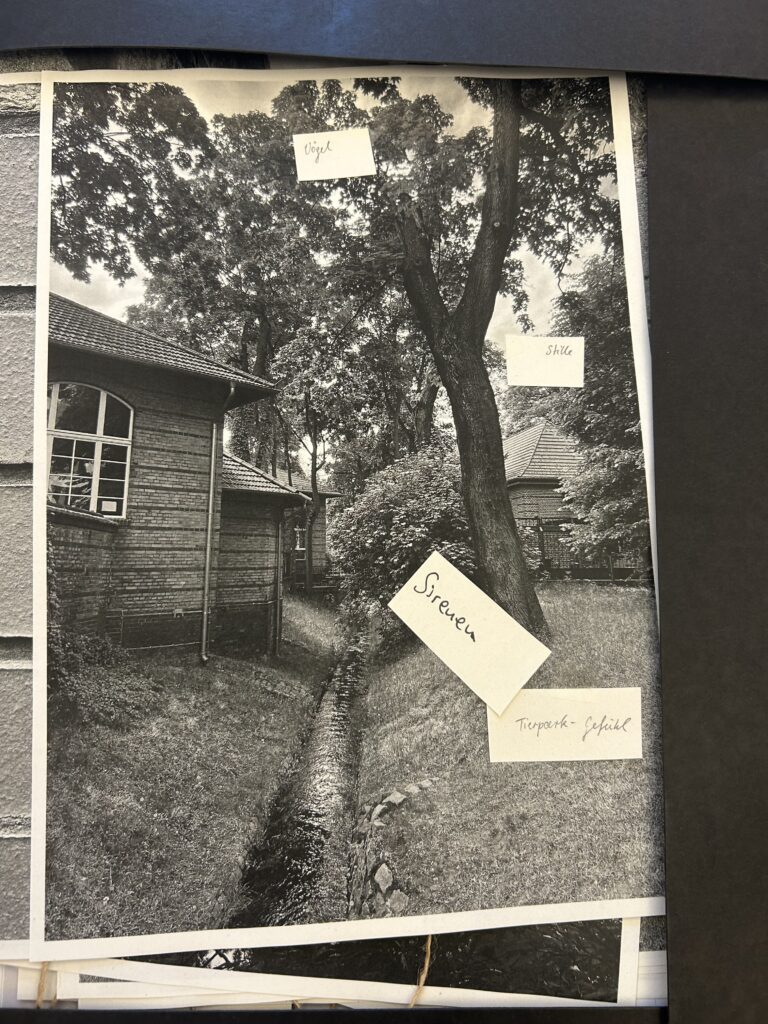
This guide is designed to activate different forms of memory.
The questions below are organised around material memory, narrative memory, embodied memory, and transmitted memory. They are not intended as a questionnaire to be completed from beginning to end.
They are prompts. You may follow whichever memories feel most vivid, meaningful, or unexpected to you.
Image: Seminar Sensory Ethnography (IfEE, HU), Campus Nord, 2026
Your connection
How did this place become part of your life?
- What brought you here?
- During which years was this place part of your life?
- How often did you come here?
Places and Things
If this memory had a location, where would we find it?
- Is there a place, object, collection, document, tool, specimen, building, pathway, garden, laboratory, classroom, waiting room, or landscape feature that remains particularly vivid in your memory?
- What remains of it in the physical world?
- Is there something that no longer exists?
- Is there a place that changed significantly over time?
- What did you call this place?
- Do you still keep something connected to it?
- What would you miss if this place disappeared?
People and Events
- Who or what do you associate with this place?
- What happened here that stayed with you?
- Where there stories, rumours, or unofficial histories that circulated there?
- What is rarely mentioned when people talk about this place?
The Body as a Map
- At what time of day do you remember this place?
- Where does this memory live in your body?
- What returns first: an image, a sensation, a gesture, a route, a voice, a dream, or a feeling?
- What can your body remember that words cannot?
- Do you remember a particular sound, smell, season, texture, atmosphere, or view?
- What was the weather like?
- Is there a route you walked repeatedly?
- Is there a daily routine, habit, or rhythm that you associate with this place?
- Does it remain with you today?
To Live Is To Leave Traces
- Is there something of you in this place?
- Is there something from this place that remains with you?
- Is there something from this place that continues to shape how you think, work, care, observe, or live?
- Are there changes in the life of this place that also became part of your own story?
Contributing: What happens next?
If you would like to contribute, we invite you to write to us at:
anatomiapublica.tat@hu-berlin.de
You may respond in writing or, if you prefer, send us a voice recording.
You are also welcome to share photographs, documents, personal notes, recordings, newspaper clippings, references, or other materials connected to your memories of this place.
Some people remember best through conversation. If you would prefer to speak in person, we would be glad to meet you during our listening hours on Wednesdays or by appointment.
Listening Hours
Wednesdays, 14:00–18:00
Raum 102
Tieranatomisches Theater
Campus Nord, Haus 3
Philippstraße 13
10115 Berlin
Every contribution helps us understand how this place has been lived, remembered, studied, worked in, cared for, and transformed across generations.
Some contributions may help shape future chapters of the Audioguide, or publications, videos, and a future archive-installation at the Tieranatomisches Theater in conexion to it. Others may simply become part of the ongoing research process.
If we would like to develop a contribution further or share it publicly, we will always contact you first and ask for your permission. A separate participation and consent form will be provided before any material is published, recorded, exhibited, or otherwise used within the project.
All contributions are treated with care.
Thank you for helping us listen to this place.
Call for Memories of This Place
June – 12 September 2026
The call culminates during the European Heritage Days (Tag des offenen Denkmals), when the final public listening and memory recording sessions will take place at the Tieranatomisches Theater. Further participation opportunities and project events can be found at the bottom of this page.
Tag des Offenen Denkmals
(European Heritage Days)
The memory recording sessions on Saturday 11.09.2026 & 12.09.26 are part of the programme for the 2026 European Heritage Days.
Further participation opportunities & events
Credits
- Project lead: Paz Ponce
- Dramaturgy: Paz Ponce, Ilona Marti
- Sound Design: Ilona Marti
- Production: Fanny Welz
- Project Management: Antonia Willisch
- Communication & Public Relations: Paz Ponce
- Project Intern: Dominique Barra (Humboldt Internship Program)
- Documentation & archival research support: Charly Bischoff (Support Head of Collection Sound Archive)
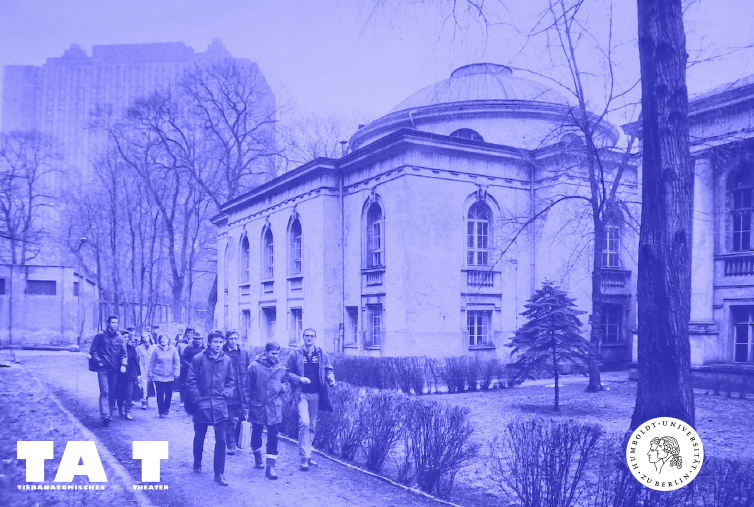
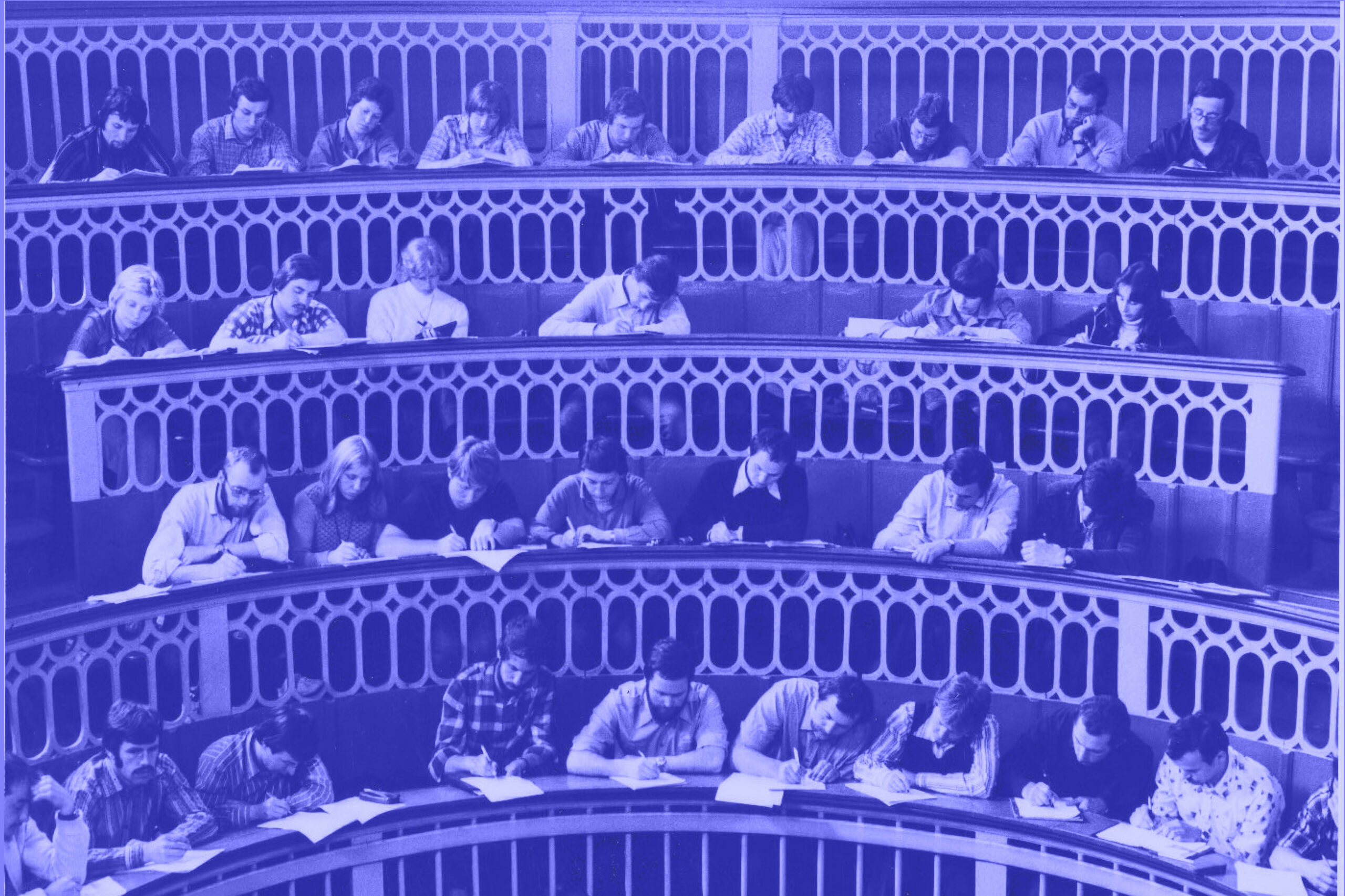
Header image Credit: HU Archives. Photo: Fishan, Veterinary Medicine Lecture (GDR, 1980s)
Partners

Easy Read Version
1. What is The Listening Theater?
The Listening Theater is a public research project.
The project is about two connected places in Berlin:
- the Tieranatomisches Theater
- Campus Nord of Humboldt University
The project is developed by the Tieranatomisches Theater and the Zentrum für Kulturtechnik.
We are creating an Audioguide and a series of Audiowalks.
The project explores the history of these places and the many people, animals, plants, buildings, and stories connected to them.
2. Why are we doing this?
These places have changed over time.
Many people have studied, worked, taught, researched, lived, or spent time here.
We would like to learn from their experiences, memories, and knowledge.
We are interested in different perspectives and different experiences.
3. How can I take part?
There are many ways to participate.
You do not need any special knowledge or expertise.
The project starts from lived experience.
You can answer one question or many.
You can share:
- a memory
- a story
- a photograph
- a document
- an observation
- knowledge about these places
There is no right or wrong way to contribute.
4. About the Guide for Remembering
The questions on this page are there to help you remember.
You do not need to answer every question.
You can choose one question or several.
Follow the memories that feel most important to you.
5. Contact
You can send us memories, stories, photographs, documents, sound recordings, questions, or other materials connected to Campus Nord.
You can also contact us if you would like to arrange a conversation or visit Raum 102.
anatomiapublica.tat@hu-berlin.de
6. Visit us
Raum 102
Tieranatomisches Theater
Campus Nord, Haus 3
Philippstraße 13
10115 Berlin
Open consultation hours:
Wednesdays, 14:00–18:00
(From June to October 2026)
6. What happens to my contribution?
If you share memories or materials with us, we will treat them with care.
Some contributions may become part of the Audioguide, Audiowalks, exhibitions, events, publications, videos, or other project activities.
If we would like to publish, exhibit, record, or otherwise share your contribution, we will contact you first and ask for your permission.
Participation in the project is voluntary.
7. Important dates
You can send us memories, stories, photographs, and other materials until 13 September 2026.
On 12 and 13 September 2026, we will organise public memory and recording sessions at the Tieranatomisches Theater.
More information is available on our website.