


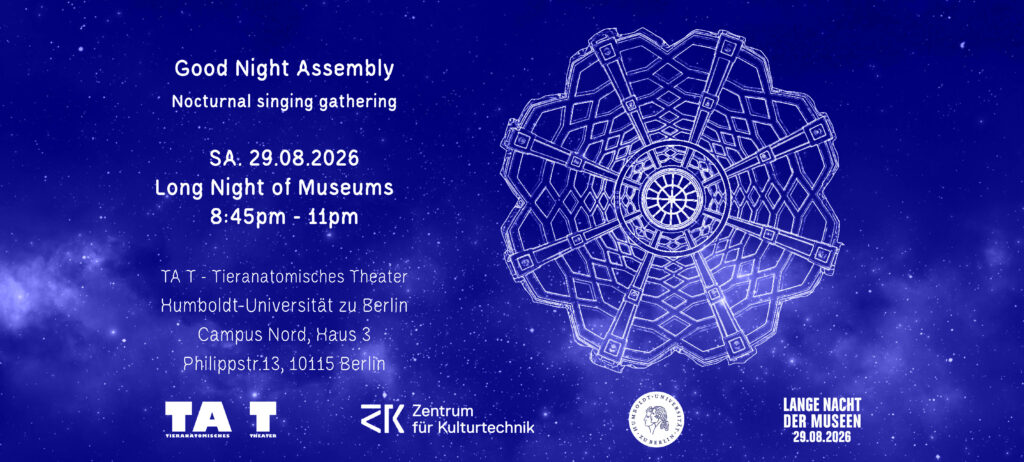
Good Night Assembly
Nocturnal singing gathering
A song always leans forward to reach a listening ear in some future somewhere — John Berger
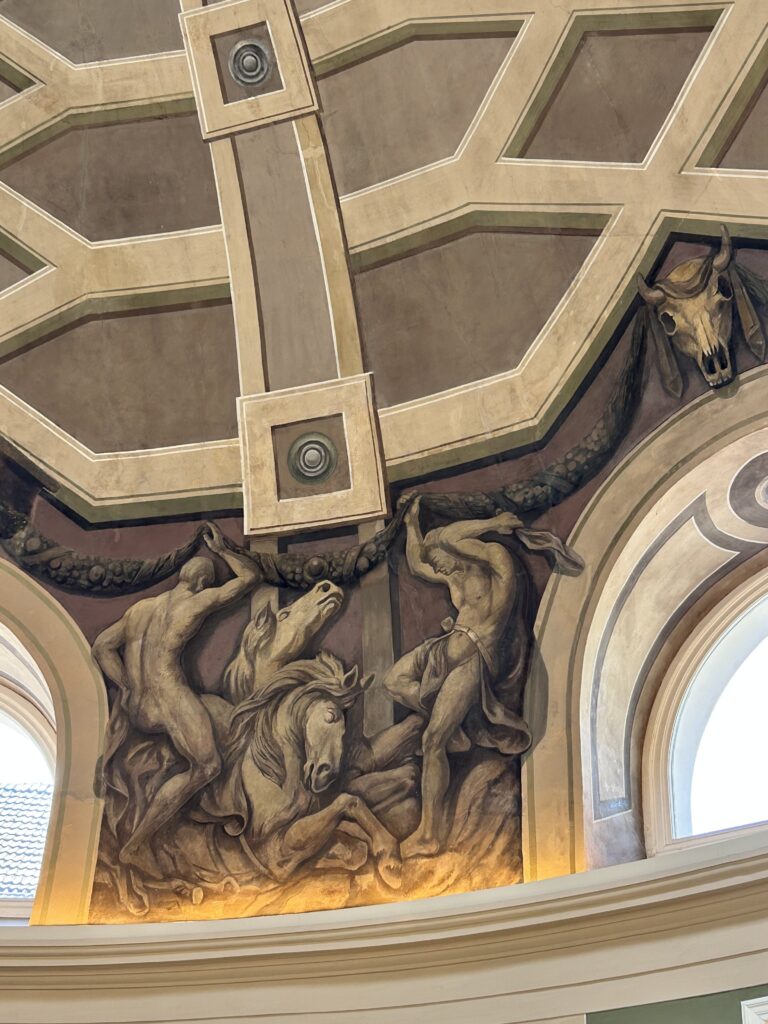
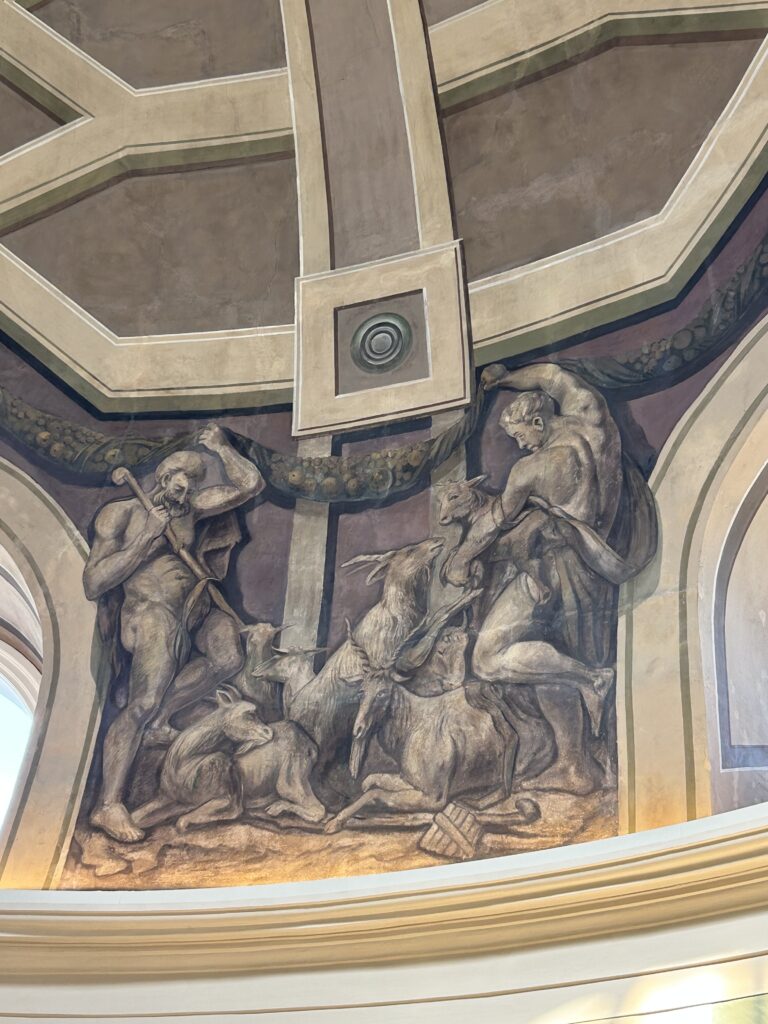
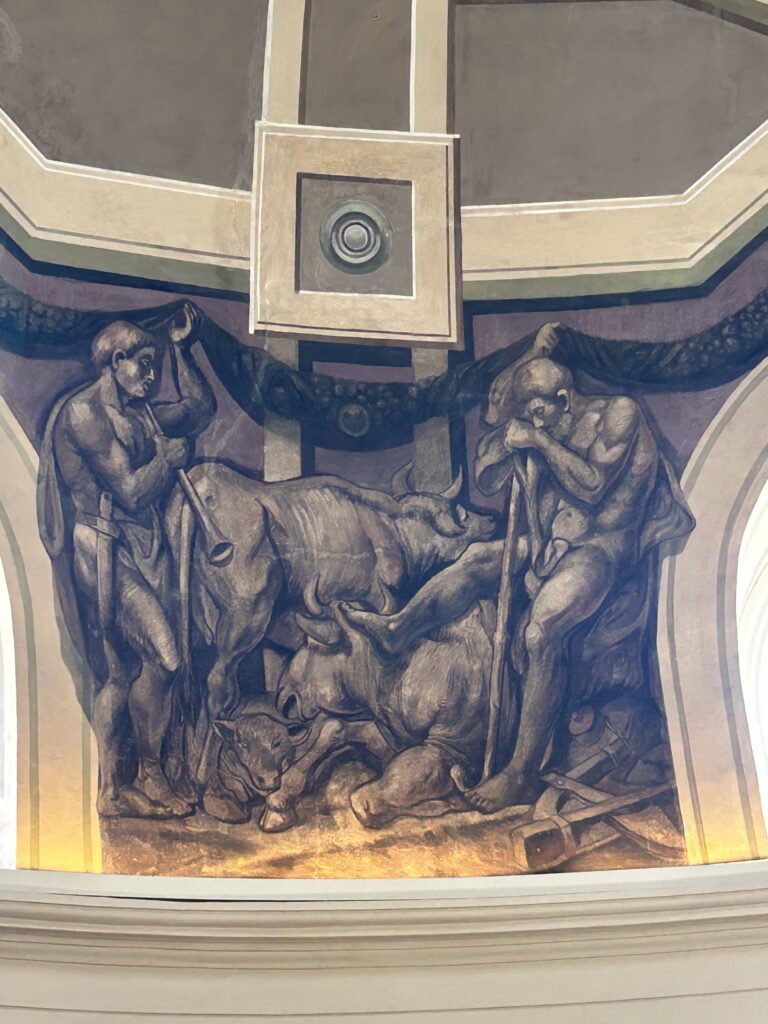
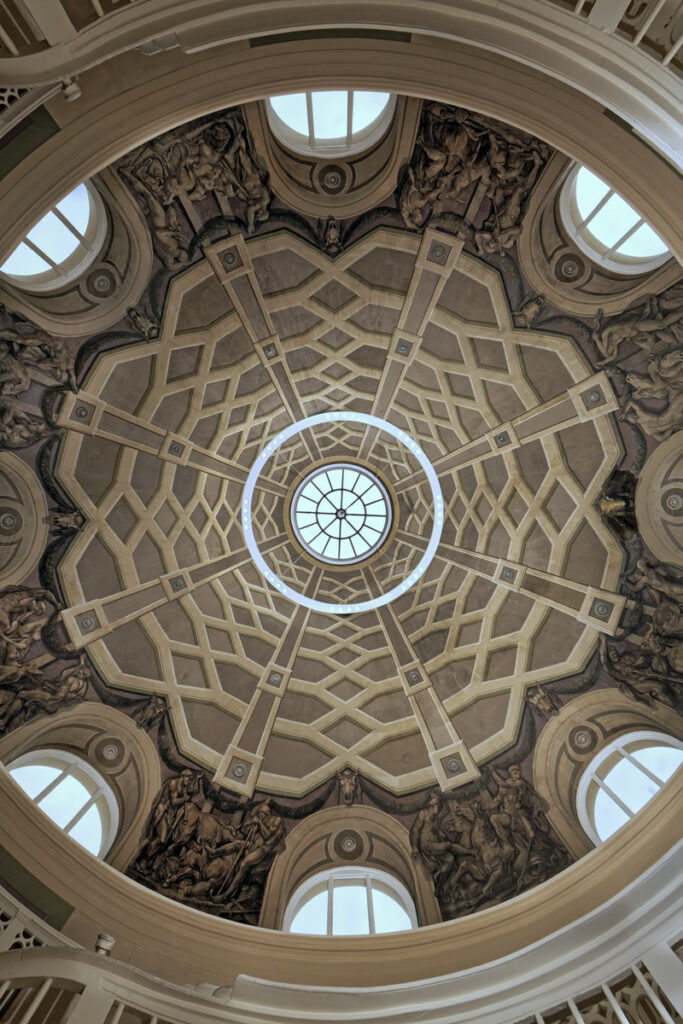
For this year’s Long Night of Museums, the Tieranatomisches Theater invites audiences to join local choirs and voice practitioners for a shared nocturnal singing gathering and collective listening session in its historic lecture hall. Beneath Bernhard Rode’s frescoes, painted in 1790, veterinary medicine appears as an act of care, but also of vigilance and control. Can voice heal this tension? Sing along, rest, or help accompany the building into sleep.
In this inward-turning room where every breath carries acoustically, the Good Night Assembly asks what it means to keep watch over another living being through the night, echoing the relationships of closeness, labor, and rest depicted in the dome above.
What to expect
The musical dramaturgy follows the slow transition from evening into night. Participating groups bring together Renaissance madrigals, lullabies and polyphonic songs from diverse traditions to form a shared, living soundscape.
A Space as Instrument: The remarkable acoustics and the creaking linden-wood benches transform the lecture hall itself into a resonant body.
A Collective Vocal Fresco: Guided by artist and holistic voice practitioner Agnieszka Bulacik, the evening unfolds through moments of silence, breathing patterns, and collective listening, gradually building a temporary sonic installation beneath the dome.
Sonic Companionship: We invite you to experience sounds that calm, gather, guide, or protect—exploring lullabies, hummed structures, and nocturnal songs that bridge human and more-than-human worlds.
Duration: 135 minutes (15 minutes introduction, 120 minutes singing)
Presented in German & English language. Singing in any language.
The Performers
The evening features the Kammerchor Sono97 and Bibliotheca Musica c/o Verein der Freunde der Staatsbibliothek (conducted by Sergi Gili Solé), the choir Todas las Voces (conducted by Byron Carrasco), and Johanne Braun with a vocal ensemble specially assembled for this occasion, bringing together participants from her summer workshop and singers from the Berlin women’s choir Akazien-Grazien. Joined by voice practitioners Mina Djordjevic and Anna Grodecki, these diverse languages, musical traditions, and voices merge into a single composition. Developed by TA T curator of public programmes & Outreach Paz Ponce in collaboration with Agnieszka Bulacik.
Note: The participating choirs and vocal groups were selected via an open call. This event is also part of the participatory audioguide project “The Listening Theater” and will be documented through audio and video recordings.
How to join our event
Get your Tickets via Lange Nacht der Museen website
or directly at the Tieranatomisches Theater on Saturday 29th.
Read the Open Call Text (closed)
Extended description of the historic dome frescoes at Tieranatomisches Theater
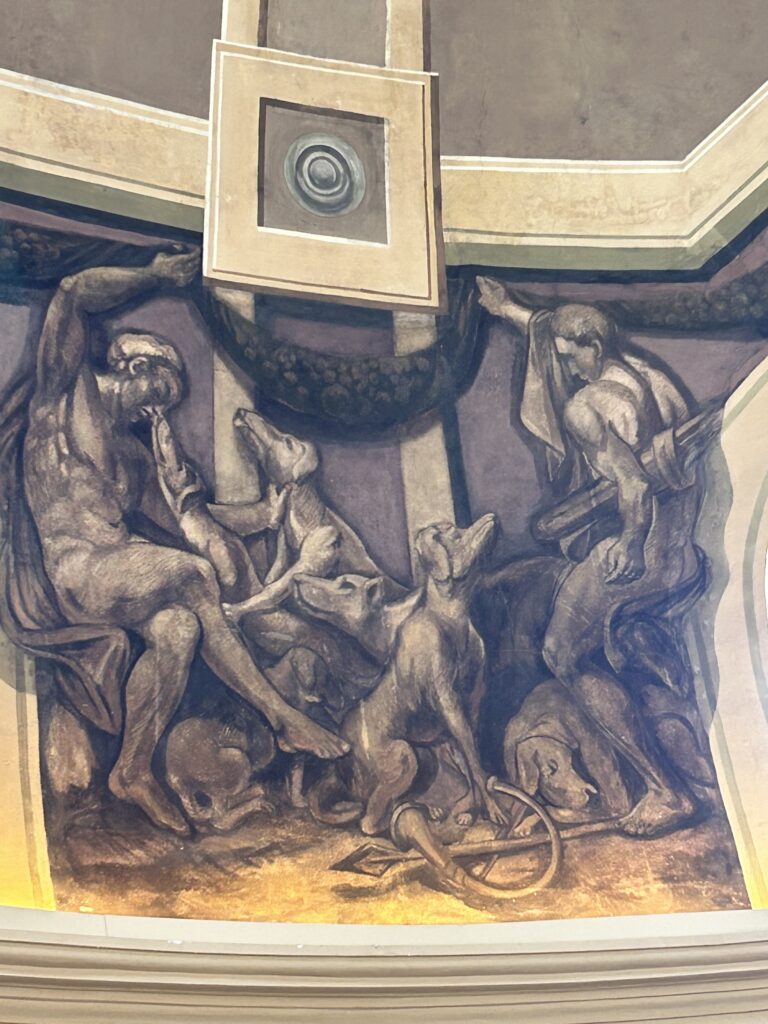
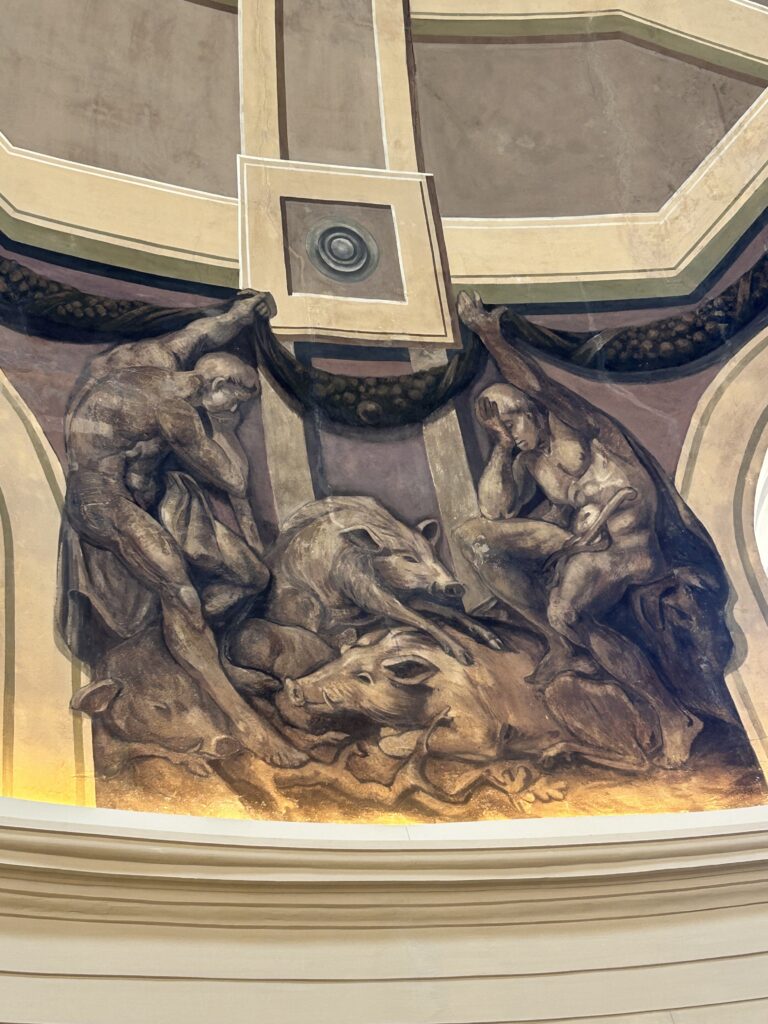
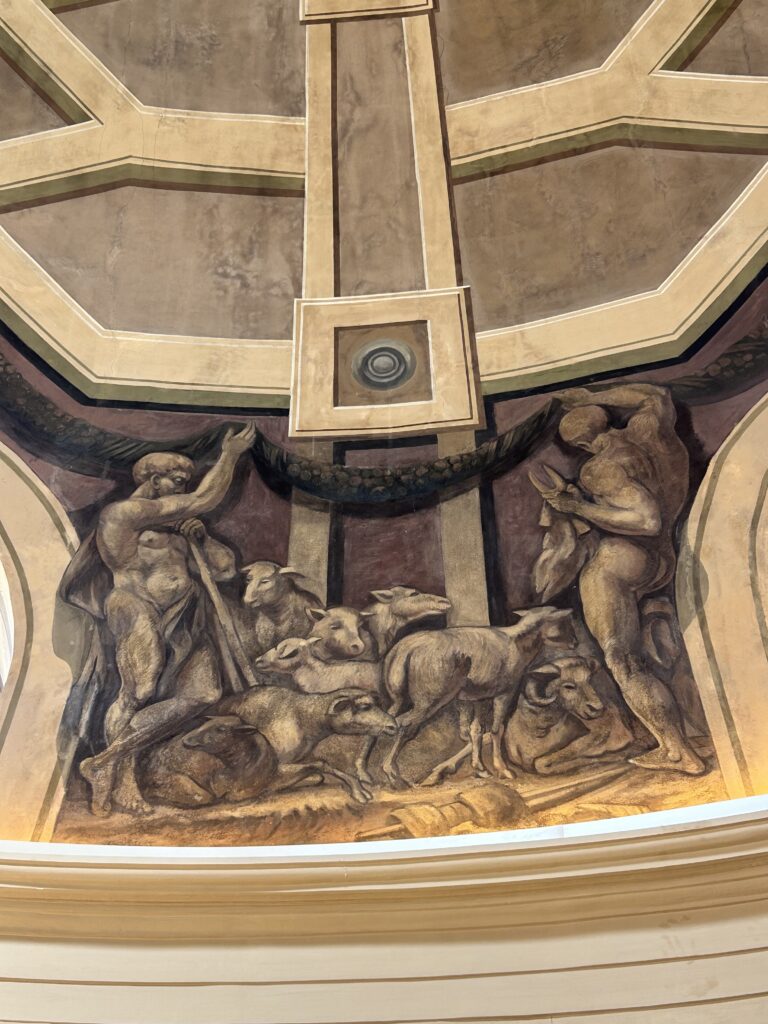
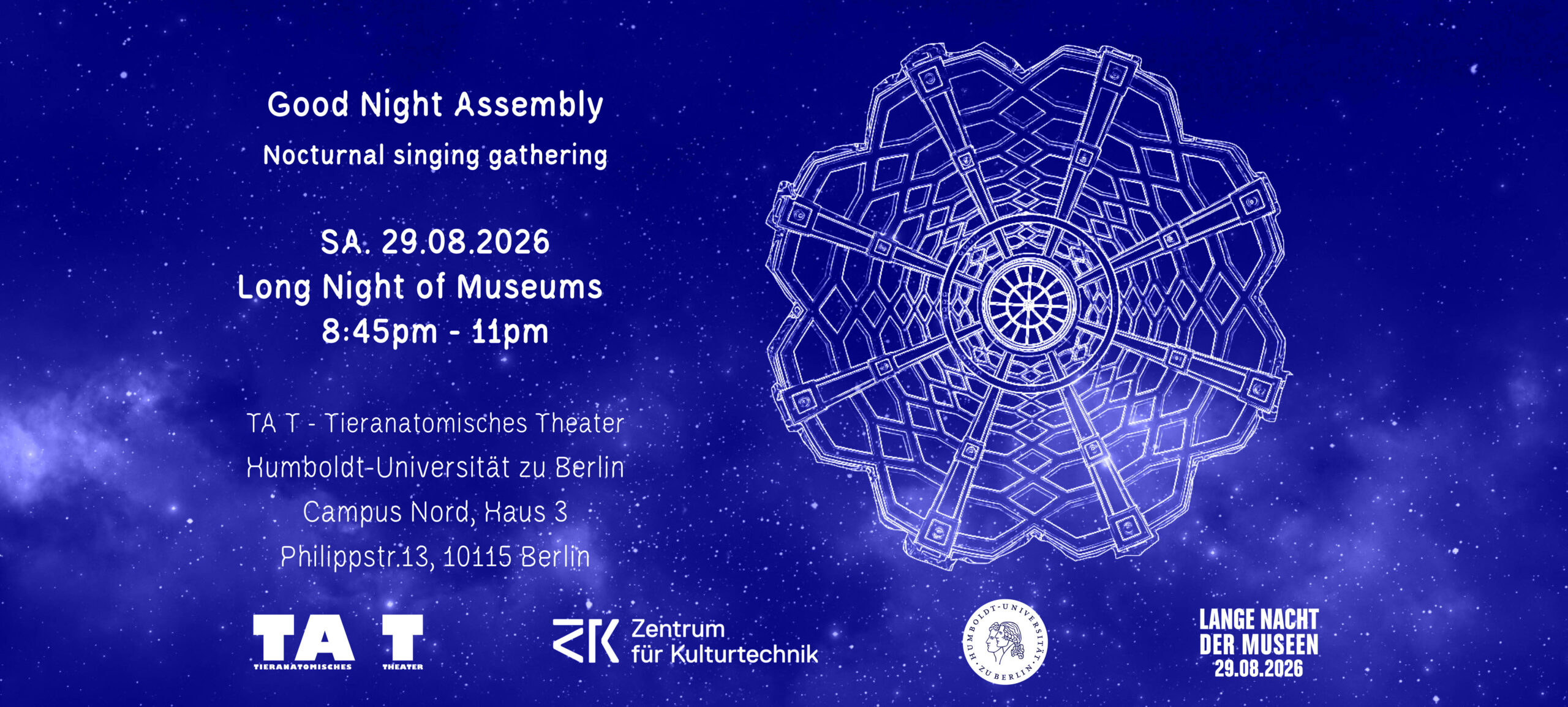
Around the circular lecture hall of the Veterinary Anatomy Theater, a dome rises upward in concentric painted geometries, resembling architectural structures that dissolve into illusion. The patterns cross one another like a woven structure opening toward the skylight above. Between the windows below the dome, human and animal figures move through uncertain scenes of closeness.
A dog rises toward the face of a seated figure and licks its nose. Another sleeps curled at the feet of an archer — or is he a hunter? Bodies lean against one another beneath hanging garlands of leaves and fruit, as if preparing a ceremony or remaining after it has ended.
A muscular figure carries a ram across his shoulders.
Some figures appear to keep watch, while others rest.
Some bodies seem exhausted, reflective, mourning, or already drifting toward sleep.
It is difficult to tell whether something is about to begin or whether it has already passed.
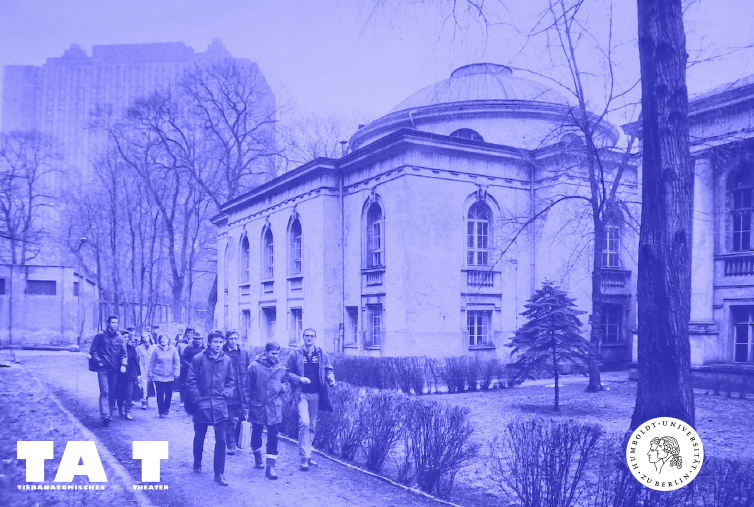
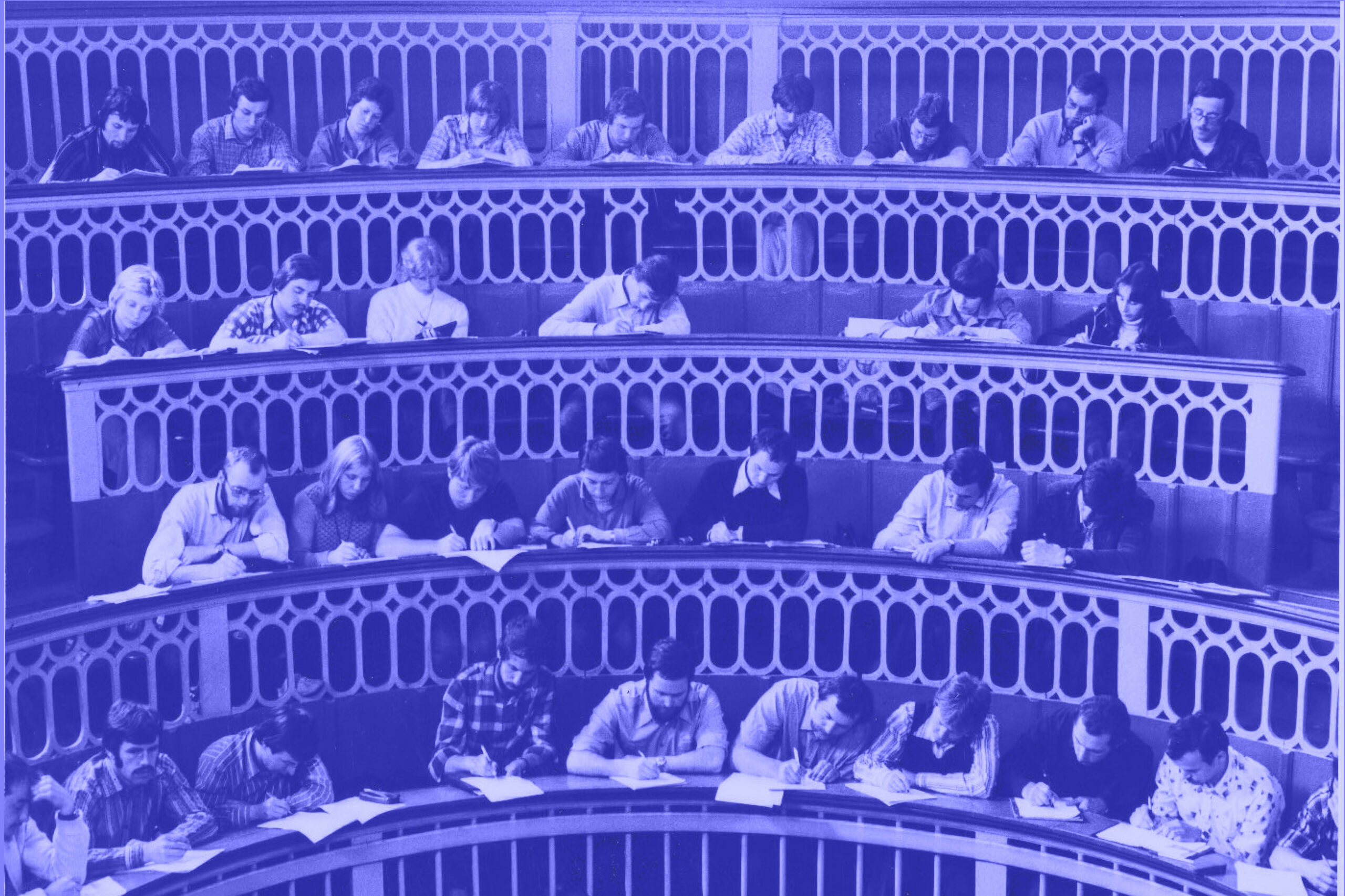
Beneath the dome, wooden benches descend in concentric circles toward the center of the room, like a small theater turned inward. Every body gathered here shares the same field of attention. Sound travels easily through the space. The linden wood creaks with even the slightest movement. A shift of weight, a whisper, a breath can carry beneath the dome.
In this room, nobody remains acoustically unnoticed.
Historical Echoes: Care and Control
Painted in the late eighteenth century by Bernhard Rode, these frescoes formed part of a larger allegory for veterinary science as a newly emerging discipline of care. They placed human and animal life within the same visual and ethical field: relations of healing, guidance, labour, dependence, companionship, contagion and control.
Yet the Tieranatomisches Theater also carries another history: observation, classification, dissection, and the instrumentalization of animal life in the name of knowledge. A place dedicated to animal medicine and collective learning, where care and control remain entangled within the architecture itself.
The figures above us remain suspended within these contradictions.
For this year’s Lange Nacht der Museen (Saturday 29.08.2026), we invite choirs, vocal ensembles, community singing groups and collective voice practitioners to gather beneath the dome and resonate with these frescoes through a shared nocturnal singing gathering.
For one night, we invite you to help put the building
— and the creatures inhabiting its dome — to sleep.
As Jonathan Crary reminds us, “sleep is one of the few remaining experiences where, knowingly or not, we abandon ourselves to the care of others.”
A lullaby accompanies that threshold: the moment when vigilance softens, breathing slows, and one body entrusts itself to another nearby presence.
We are interested in the sounds through which bodies accompany one another into rest, sleep and states of transition: lullabies, laments, humming structures, breathing patterns, whistles, drones, whispers, repeated vocal gestures, shepherd calls, nocturnal songs and more-than-human vocal practices.
Songs for those who keep wake.
Songs for those who may not wake.
What sounds accompany bodies into rest?
What voices remain awake while others sleep?
What does it mean to keep watch over another creature through the night?
And, is this going to be a long night?
What does companionship sound like?
What sounds do we make to calm, gather, guide, follow or protect one another?
How do we call bodies closer?
We invite participating groups to bring a fragment of closeness capable of inhabiting the building acoustically.
How to join the Good Night Assembly
We welcome contributions from choirs, vocal ensembles, community singing groups and collective voice practitioners interested in inhabiting the Hörsaal through sound, care, listening and nocturnal presence.
Blind and visually impaired voice practitioners are warmly welcome. The Tieranatomisches Theater is accessible without barriers. There is an elevator connecting to the Lecture Hall. The upper sections of the tiered seating are not wheelchair accessible.
To participate singing at the Good Night Assembly, please send the following via email by July 15th, 2026:
– a short introduction to your ensemble or practice
– a singing demo (audio or video link/file)
– a few words about the song / vocal practice you would like to bring in relation to the theme of the Good Night Assembly.
The event forms part of The Listening Theater — the long-term Audioguide & Audiowalk project developed for Campus Nord of Humboldt-Universität zu Berlin. Selected live recordings from the evening will later become part of the TA T Audioguide sound archive, continuing their movement toward future listeners.
The information and materials submitted will be used exclusively for the selection and organisation of the Good Night Assembly. They will not be published or shared outside the project team.
Privacy Notice
We will use the information and materials submitted through this open call solely for the selection and organisation of the Good Night Assembly.
Application materials will only be accessed by the project team.
Before the event, participating groups will receive further information regarding documentation, audio recording, consent, and the possible inclusion of event recordings in The Listening Theater Audioguide sound archive.
Lange Nacht der Museen
(Long Night of Museums)
The event is part of the programme for the 2026 Long Night of Museums.
Related exhibitions and events
Credits
- Concept, Curation: Paz Ponce
- Collaborating Guest Researcher & Facilitator: Agnieszka Bulacik
- Lighting: Fanny Welz
- Project Management: Antonia Willisch
- Communication & Public relations: Paz Ponce, Frederike Nolte
Partners


Easy Read Version
A song travels forward.
It waits for someone to listen.
Maybe that listener comes later.
Maybe that listener is somewhere else.
— after John Berger
A night of singing at the Tieranatomisches Theater
August 29 is the Long Night of Museums.
Choirs and vocal groups, selected through an open call, will gather inside the round hall of the Tieranatomisches Theater.
This building has a long history.
People came here to learn about animals and animal medicine.
Some animals were cared for here.
Some animals were used for research.
Sometimes this history feels sad.
For one evening, we want to fill the building with voices, listening, and care.
Above us are old paintings. They show animal medicine as care, but also as control and vigilance.
We ask ourselves: Can the voice heal this tension?
For one evening, we want to fill the building with voices, listening, and care.
You can sing along, rest, or help accompany the building and its living beings to sleep.
We will sing lullabies, night songs, shepherds’ calls, humming, and other vocal sounds.
We will listen to each other.
Artist and voice practitioner Agnieszka Bulacik will guide the evening and create moments of collective listening between the different contributions.
The evening features:
- Kammerchor Sono97 and Bibliotheca Musica (led by Sergi Gili Solé)
- Todas las Voces (led by Byron Carrasco)
- Johanne Braun with a special vocal group from her summer workshop and the women’s choir Akazien-Grazien
- Voice practitioners Mina Djordjevic and Anna Grodecki
Curated by Paz Ponce. Paz works for the Tieranatomisches Theater as curator for public programmes and community outreach.
Note
This event is part of The Listening Theater audioguide project.
The evening will be recorded with sound and video.